Collectors' Cabin
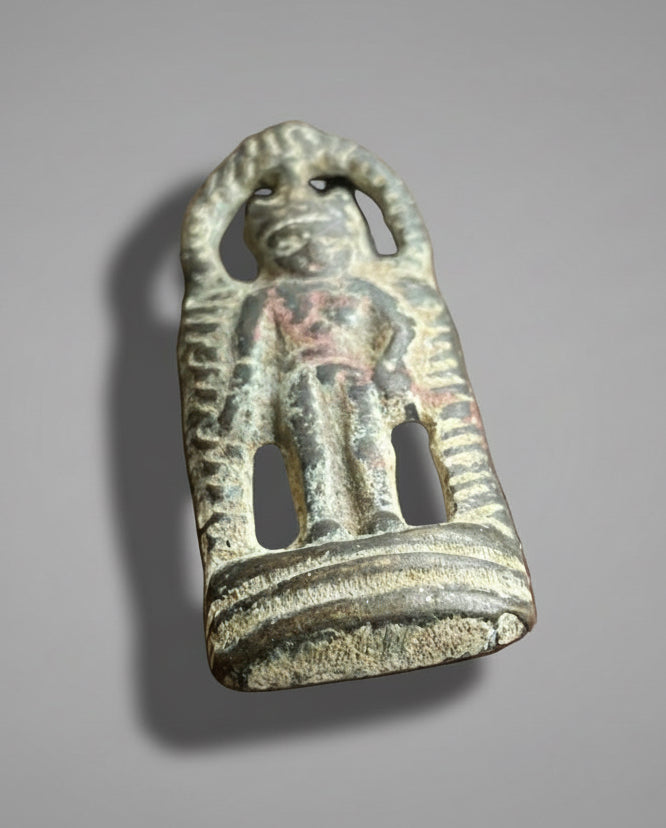
Rare Medieval Buddhist Amulet/Tokcha of Tara. 1300-1400AD, Tibet
Rare Medieval Buddhist Amulet/Tokcha of Tara. 1300-1400AD, Tibet
Couldn't load pickup availability
This item is now Sold.
This remarkable 14th-century copper-alloy (bronze) tokcha depicts Tara, the Buddhist goddess of protection, standing within a stupa. Tokchas were small ritual talismans traditionally worn or sewn onto clothing in medieval Tibet and the Himalayan region, to ward off evil and attract positive energies.
In Tibetan belief, they are believed to be imbued with protective or auspicious power — some traditions even hold that thokcha originate from meteoric metal (“sky iron” or thunder‑struck metal), hence their mystical aura. Over centuries, effective talismans were often passed down, with wear and patina consistent with prolonged ritual handling.
This example shows well-worn surfaces and natural age patina, highlighting both its ritual history and enduring presence as a protective object. Small and portable, it would have functioned as a personal talisman, intimately connected with daily devotional practice.
Specimen Details
Origin: Himalayan region, Tibet
Age/Era: Medieval Perioid, 14th century (circa 1300-1400AD.
Material: Copper-alloy (bronze)
Height: 5.5cm
Iconography: Tara, standing within a stupa; small lug to reverse for wearing
Condition: Intact, yet well-worn; natural patina consistent with centuries of ritual use
Function: Ritual talisman intended for personal protection; worn or sewn onto clothing
Comparable Specimens
- Michael Backman Ltd: A virtually identical copper-alloy Tara tokcha was previously stocked by a specialist Himalayan art gallery, illustrating the market and scholarly recognition of this type. (Michael Backman Ltd Archive)
- Ashmolean Museum, Oxford: The Ashmolean’s collection includes several 13th–14th century Tibetan tokchas and talismanic plaques of similar size and function, documenting the style, iconography, and ritual use of portable protective amulets. (Ashmolean Jameel Centre Collection)
Share