Collectors' Cabin
King Alexander III Of Scotland (1249–1286) Silver Penny - Second Coinage - Perth Mint - S. 5057 (c.1280-1286)
King Alexander III Of Scotland (1249–1286) Silver Penny - Second Coinage - Perth Mint - S. 5057 (c.1280-1286)
Couldn't load pickup availability
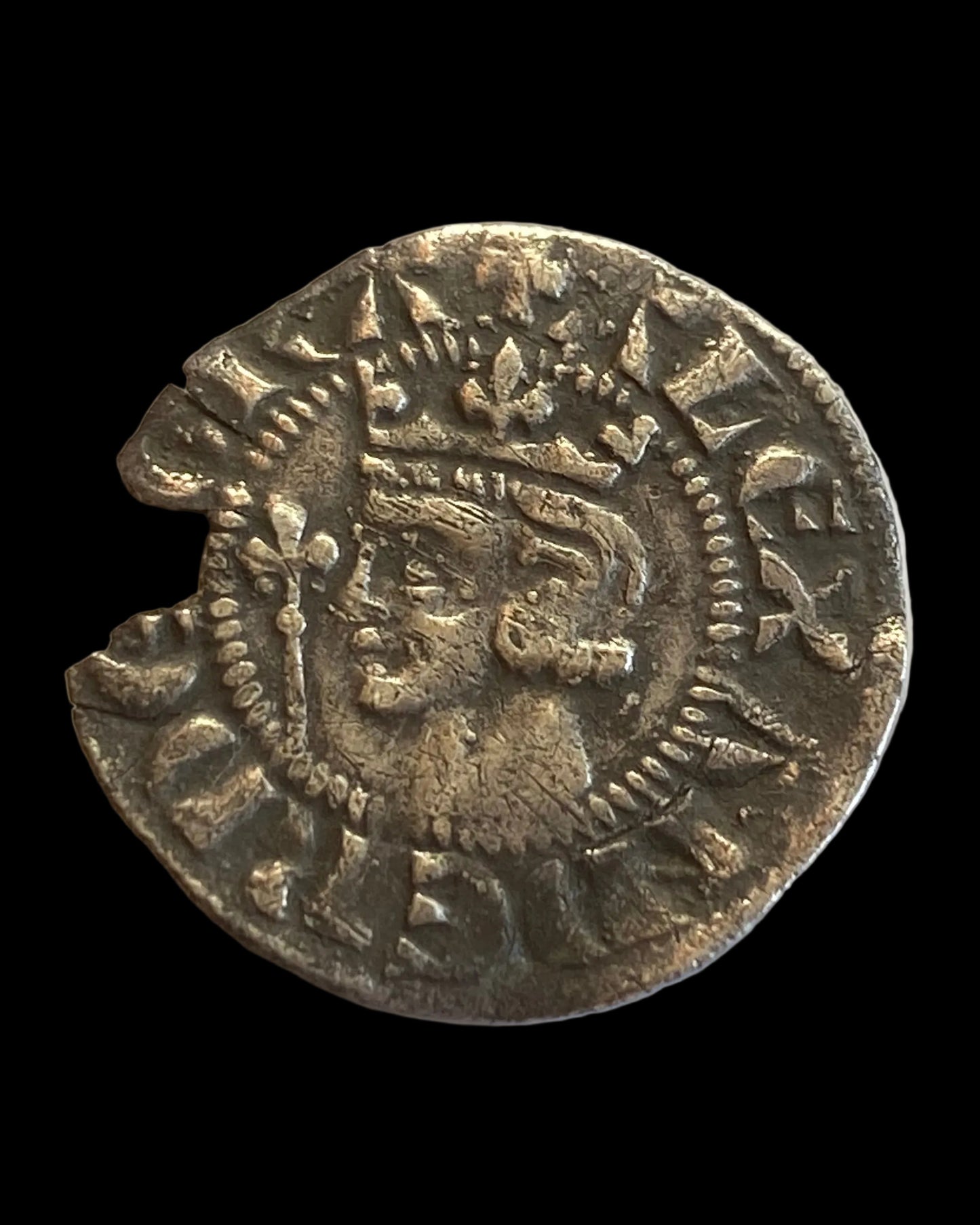
This silver penny of Alexander III is an exceptional example of medieval Scottish coinage. Struck at the Perth mint between circa AD 1280–1286, it survives in remarkable overall condition.
Obverse: “ALEXANDER DEI GRA”
Translation: “Alexander, by the Grace of God”
- Crowned bust facing left, with sceptre to left.
Reverse: “REX SCOTORVM”
Translation: “King of the Scots”
- Long cross with six-pointed stars in each quarter (24 points)
Type reference: Spink 5057 (Alexander III, Second Coinage, Perth Mint)
Weight: ~1.5 g
Diameter: 19mm x 19mm
Composition: Silver
Fineness: ~<.925
Method: Hammered
Condition:
The coin displays a near full flan with strong, raised details throughout. The portrait is particularly striking, which displays clear facial features, visible eye and nose detail, and a smile on the face of the king. The crown structure, sceptre elements, and legends are all well formed, and clear. The clarity and depth of the portrait give the king’s likeness real presence, making this both a visually striking and historically significant piece.
The reverse is well struck and centred, with a sharp long cross, detailed stars, and a clear, readable legend.
There is a small edge chip and a very slight bend to part of the flan. The chip causes minor loss to the letter “I” in the obverse legend “DEI GRA” and the “V” in “SCOTORVM” on the reverse. These are minor and do not significantly detract from the overall eye appeal, which remains strong for the type.
Historical Context:
Alexander III’s reign (1249–1286) marked the last period of relative stability in medieval Scotland. His sudden death by a fall from his horse during a stormy night in 1286 triggered a succession crisis, ultimately leading to the Wars of Scottish Independence.
At the time this coin was struck, William Wallace would have been a child of roughly 10–16 years, growing up in the same Scotland through which this coin circulated. Rising after King John Balliol’s abdication, Wallace became a central figure in resisting English occupation under Edward I. He famously led uprisings, achieving military victories such as the Battle of Stirling Bridge, and emerged as one of the most iconic leaders of the Wars of Scottish Independence. Wallace remains a symbol of Scottish freedom to this day.
Coins like this offer a rare, tangible connection to the political and economic landscape of late 13th-century Scotland, making this piece a genuine link to one of the most fascinating and pivotal chapters in British history.
Share