Collectors' Cabin
Ancient Egyptian Openwork Wedjat Eye (Eye of Horus) - Cream Faience with Black Manganese Pigment - Third Intermediate Period, c. 1069-664 BC
Ancient Egyptian Openwork Wedjat Eye (Eye of Horus) - Cream Faience with Black Manganese Pigment - Third Intermediate Period, c. 1069-664 BC
Couldn't load pickup availability
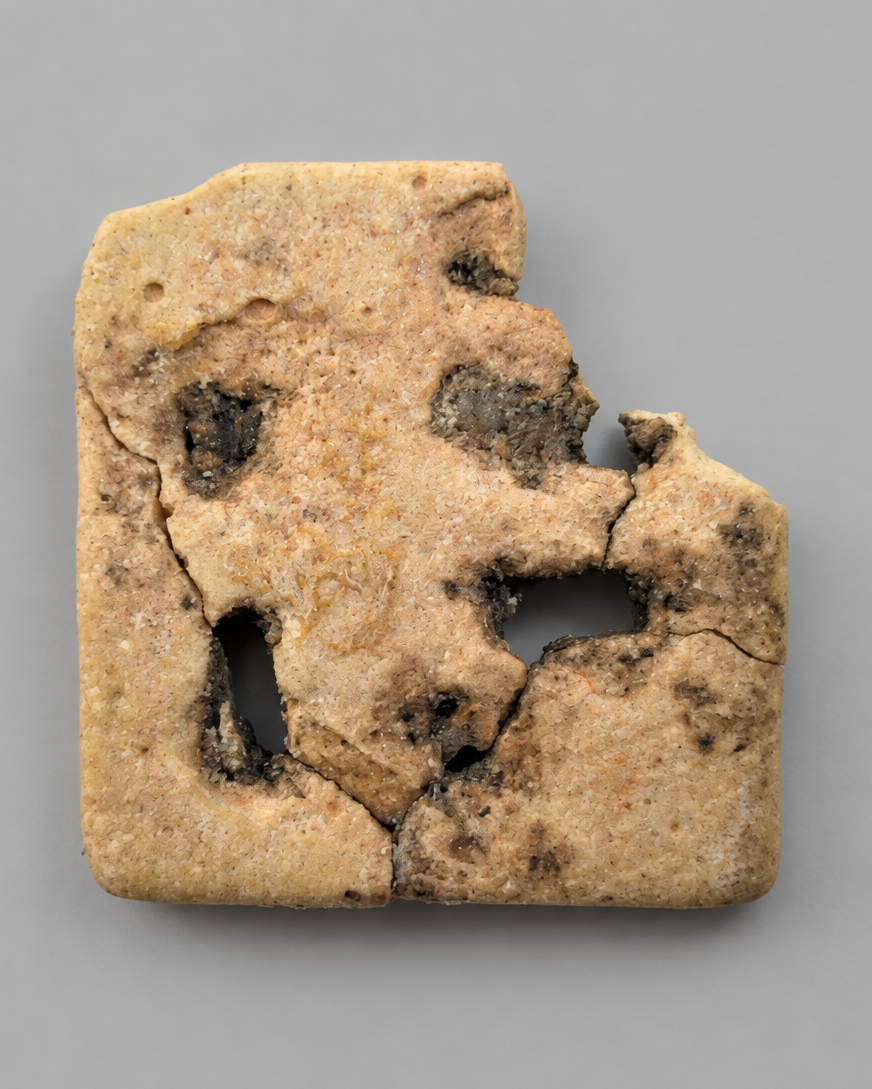
A striking ancient Egyptian bi-chrome faience openwork amulet of the Wedjat (Eye of Horus) within a square frame.
The specimen is cleanly moulded from Egyptian faience in a robust square openwork plaque. The faience body features a preserved pale cream colouration, with the heavy eyeliner, brow, and pupil highlighted by a contrasting dark manganese oxide pigment.
The wedjat eye represents the healed eye of the god Horus. It depicts a combination of a human and a falcon eye, since Horus was often associated with a falcon. In Egyptian mythology Horus’ eye was injured or stolen by the god Seth and then restored by Thoth. The wedjat eye embodies healing power and symbolizes rebirth. An amulet in this shape was thought to protect its wearer and to transfer the power of regeneration onto him or her. It was used by the living as well as for the dead, often worn or hung on the deceased at burial.
The specimen is accompanied by a red vintage display box with protective inlay, from a previous collector. (Please see image 3)
Specimen Details:
Specimen: Ancient Egyptian Openwork Wedjat Eye (Eye of Horus)
Origin: Egypt, North Africa
Period: Third Intermediate Period, c. 1069-664 BC
Material: Glazed Composition (Egyptian Faience)
Size: 23mm x 22mm x 4mm
Condition: Black manganese pigment well preserved around eye details, contrasting with the cream faïence. Professionally stabilised and conserved; historic repairs and a small ancient loss to the upper-left corner of the plaque frame. Please refer to the images.
Provenance: Formerly in the private collection of a Scottish gentleman, assembled in Scotland throughout the 1960s. Later acquired by ‘S’, a private collector based in Kent, South East England. Subsequently acquired by Collectors’ Cabin Ltd from ‘S’, 2026.
Comparable specimens (for reference):
Accession number: M11922o - National Museums Liverpool, World museum (permanent collection)
Accession number: LDUCE-UC59824 - Petrie Museum of Egyptian Archeology (permanent collection)
Accession number: LDUCE-UC71823 - Petrie Museum of Egyptian Archeology (permanent collection)
Share