Collectors' Cabin
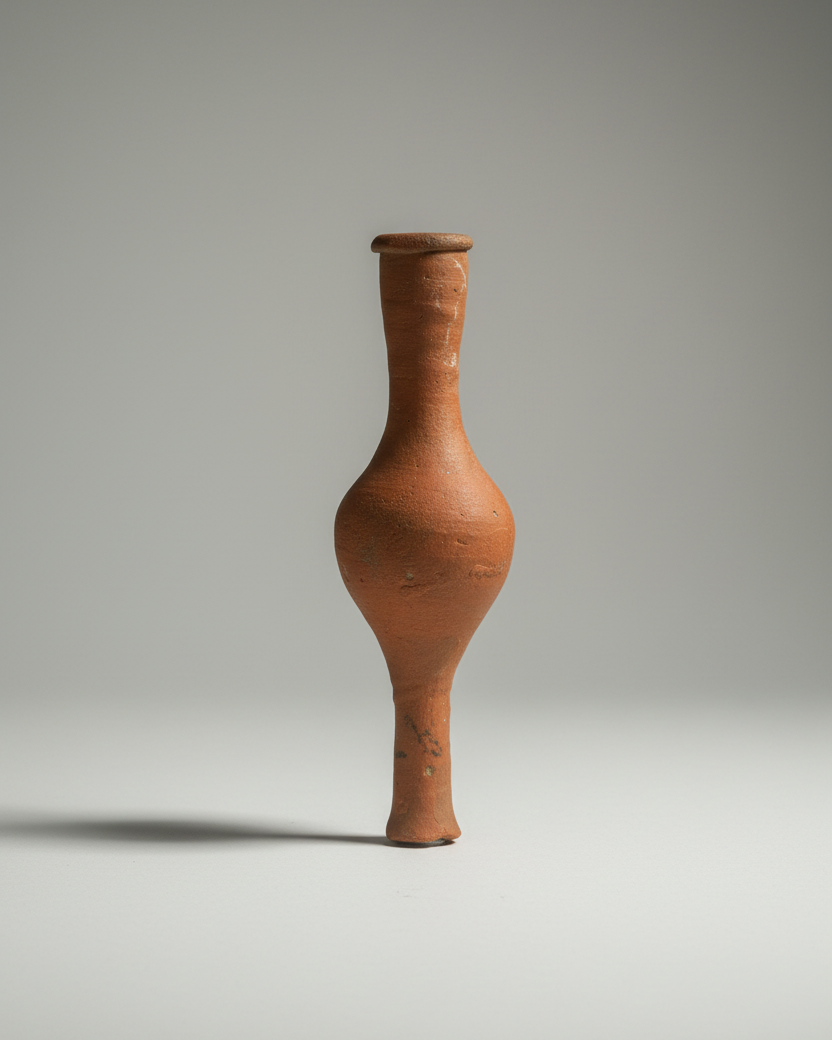
Ancient Egyptian Spindle-Form Terracotta Unguentarium - Aswan, Upper Egypt, Nile Valley - Ptolemaic Period, c.300–100 BC
Ancient Egyptian Spindle-Form Terracotta Unguentarium - Aswan, Upper Egypt, Nile Valley - Ptolemaic Period, c.300–100 BC
Couldn't load pickup availability
A fine example of a spindle-form terracotta unguentarium, originating from Ptolemaic Egypt. The vessel is formed in a deep red terracotta fabric and retains its original elongated, tapering profile, with a narrow neck and gently rounded base.
Unguentaria of this form were associated with the storage and application of perfumed oils, cosmetics and other unguents. Due to their contents being associated with purification and burial rituals, these terracotta vessels are uncovered in Hellenistic and Greco-Roman cemeteries throughout Egypt.
The vessel remains remarkably intact, with only a single minor chip to the rim. There are traces of decorative painted lines towards the base and also inside the rim (Please see images 4 & 5).
The form is particularly well documented archaeologically. A closely comparable example is held by the British Museum (X.2240), measuring 11.7 cm in height and likewise originating from Aswan.
Specimen Details:
Specimen: Ancient Egyptian spindle-form unguentarium
Culture: Ancient Egyptian
Period/Age: Ptolemaic Period, c. 300–100 BC
Locality / Origin: Aswan, Upper Egypt, Nile Valley, Egypt, North Africa
Material: Fine terracotta / fired ceramic
Form: Spindle-form (fusiform), elongated and tapering body with a narrow elongated neck and rounded lower body/base
Fabric: Deep red to reddish-orange ceramic fabric with mica and black and white inclusions.
Colour: Deep red terracotta, with natural variation in the fired ceramic surface
Technique: Wheel-made ceramic vessel; fired terracotta
Dimensions: 13.3 cm in height
Condition: Original ceramic surface and patina preserved. Remarkably intact, One very small chip to the rim. No other breaks or restorations.
Provenance: Formerly part of an early-20th Century collection. Subsequently in the collection of a private African art collector in Southern England, United Kingdom; later acquired by Y.S, a London based antiquities collector & dealer. Acquired by Collectors’ Cabin, 2026.
Comparable Examples (For Reference):
- British Museum, X.2240 (accession no. H2224).- Ptolemaic Egyptian terracotta unguentarium, 11.7 cm high, dated 3rd–2nd century BC and attributed to Aswan origin.
- Louvre, E 30569 — Egyptian terracotta unguentarium, approximately 12 cm high, with an elongated tapered body and long neck. The Louvre records the object as Ptolemaic/Roman based on stylistic attribution.
Share