Collectors' Cabin
Large Ancient Egyptian Faience Funerary Pectoral Scarab (With 6 holes for wing attachment) - Dynasty 25-31, Late Period, c. 664-332 BC
Large Ancient Egyptian Faience Funerary Pectoral Scarab (With 6 holes for wing attachment) - Dynasty 25-31, Late Period, c. 664-332 BC
Couldn't load pickup availability
This item is now sold.
A large, mould-made ancient Egyptian funerary pectoral scarab composed of glazed composition (faience), dating to the Late Period, c. 664 - 332 BC.
This specimen was once the centrepiece of a three-piece ‘winged scarab’ pectoral, understood to have been placed on the chest of the mummy during the final stages of the mummification and wrapping ritual.
As noted by the Metropolitan Museum of Art, this specific type of scarab is known from dynasty 25 onwards.
The obverse depicts a stylised representation of the sacred scarab beetle (Scarabaeus sacer) with distinct moulded morphological attributes including a rounded head (clypeus), pronounced prothorax, and smooth elytra.
The beetle body is raised upon an extended, integral oval flange pierced somewhat symmetrically with six irregular vertical holes (three positioned laterally on each side). These perforations were engineered for the attachment of separately moulded falcon wings and for stitching the completed pectoral unit flat onto mummy bandages or into a woven bead netting.
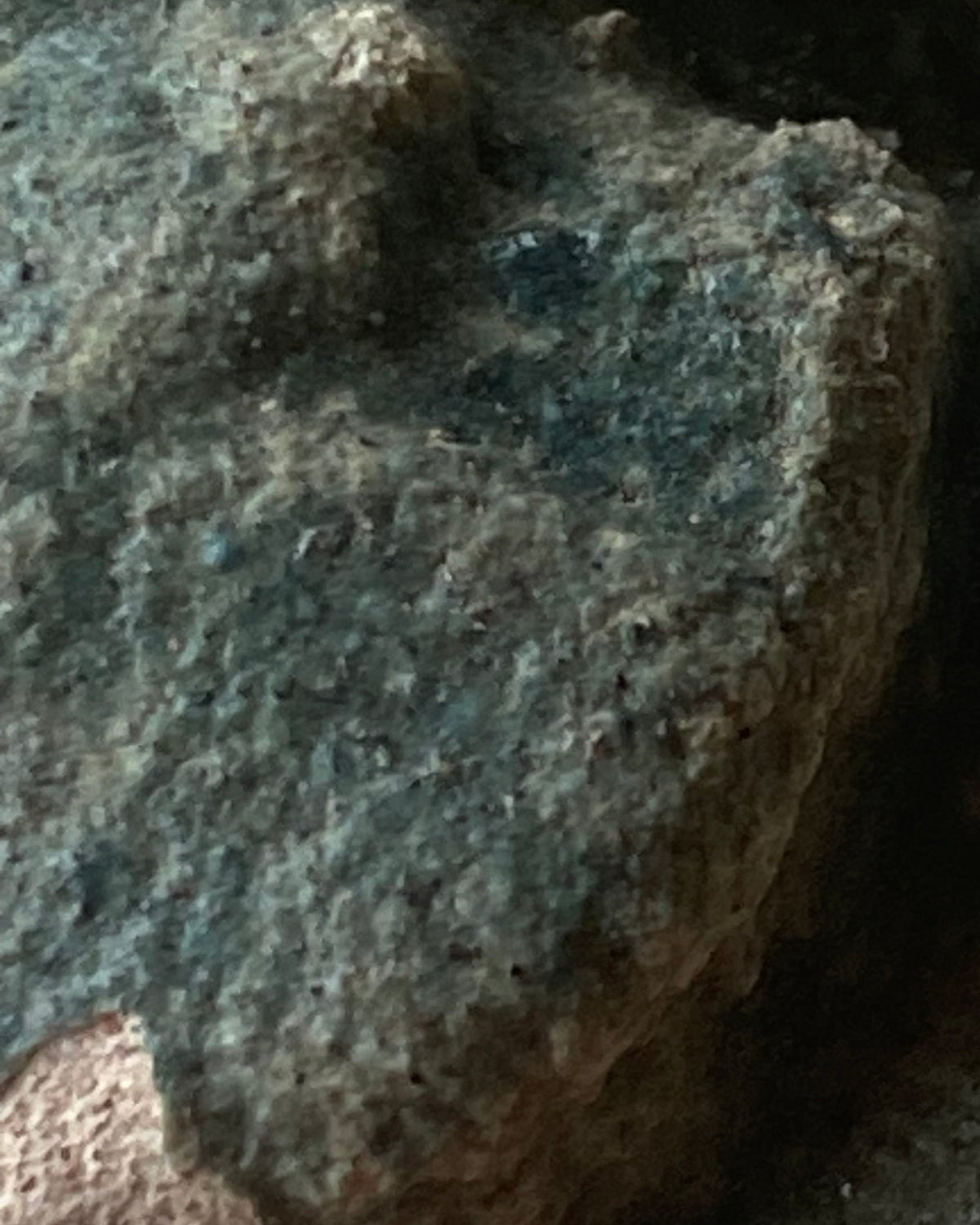
The reverse is entirely flat and un-inscribed, with raised areas showing a weathered surface with an exposed white-to-cream inner fritted quartz core diagnostic of worn ancient faience.
In Egyptian mythology, the scarab beetle was the earthly manifestation of the god Khepri, who rolled the sun across the sky every morning to signal rebirth. Placing a winged version over the chest was believed to act as a powerful protective charm, guaranteeing that the soul would successfully experience resurrection in the afterlife.
- Specimen Details:
- Specimen: Funerary Pectoral Scarab beetle (with 6 holes for attachment)
- Origin: Egypt, North Africa
- Age/Period: Dynasty 25-31, Late Period, c. 664-332 BC
- Dimensions: 71 mm (Length) x 46mm (Width) x 20mm (Depth)
- Material: Glazed Composition (Egyptian Faience)
- Condition: Complete and intact; features stable glaze degradation displaying a highly characteristic exposed white-to-cream fritted quartz core and minor, uncleaned earthen burial deposits consistent with age.
- Provenance: Ex Southern English private collection formed in the early-mid 20th century. Acquired from the private collection of a South Oxfordshire gentleman, 2026.
- Comparable Published Specimens (for reference):
-
• Object Number: 30.8.1083a-c - The Metropolitan Museum of Art.
• Object Number: 30.8.1082a-c - The Metropolitan Museum of Art.
Share